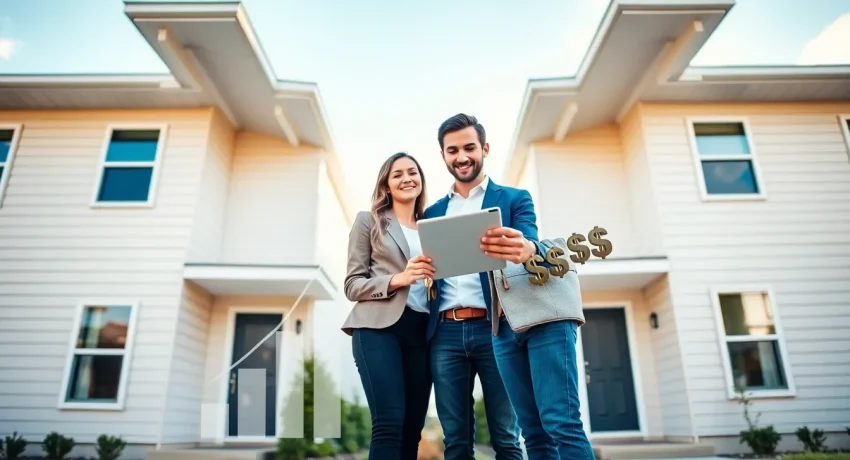

House hacking techniques help homeowners slash their monthly housing expenses by generating rental income from the property they live in. The concept is simple: buy a property, live in part of it, and rent out the rest. This approach has helped thousands of people build wealth while keeping a roof over their heads.
Whether someone rents a spare bedroom, buys a duplex, or lists a guest suite on Airbnb, house hacking offers a practical path to financial freedom. This article breaks down the most effective house hacking techniques and explains how each strategy works in practice.
Table of Contents
ToggleKey Takeaways
- House hacking techniques let homeowners reduce or eliminate housing costs by renting out portions of their property while living in it.
- Renting spare rooms or basement units is the simplest approach, requiring minimal upfront investment and potentially covering $1,200 or more in monthly expenses.
- Purchasing a multifamily property (duplex to fourplex) offers complete privacy while generating rental income from separate units.
- Owner-occupied properties qualify for low down payment loans like FHA financing (3.5% down), making house hacking accessible to first-time buyers.
- Short-term rentals through Airbnb can generate nearly double the income of long-term rentals, though they require more active management.
- Creative house hackers can combine multiple strategies—room rentals, Airbnb, parking, and storage—to maximize income and build wealth faster.
What Is House Hacking?
House hacking is a real estate investment strategy where the property owner lives in their home while renting out portions of it. The rental income offsets or eliminates their mortgage payment, property taxes, and other housing costs.
The term gained popularity in the early 2010s through real estate investing communities. But the practice itself isn’t new. Homeowners have rented spare rooms and in-law suites for generations. What’s changed is the intentional, strategic approach people now take.
House hacking techniques work for various property types:
- Single-family homes with extra bedrooms
- Duplexes, triplexes, and fourplexes
- Homes with basement apartments or accessory dwelling units (ADUs)
- Properties suitable for short-term rentals
The math behind house hacking is straightforward. If a mortgage costs $2,000 per month and rental income brings in $1,500, the effective housing cost drops to $500. Some house hackers eliminate their housing costs entirely. Others generate positive cash flow while living for free.
This strategy works especially well for first-time homebuyers. Owner-occupied properties qualify for low down payment loans like FHA financing, which requires just 3.5% down. That lower barrier to entry makes house hacking accessible to people who couldn’t otherwise afford investment properties.
Rent Out Spare Rooms or a Basement Unit
Renting spare rooms represents the simplest house hacking technique. A homeowner with extra bedrooms can list them on platforms like Roommates.com or Craigslist and collect monthly rent.
This approach requires minimal upfront investment. The homeowner already owns the property. They just need to find reliable tenants and establish clear house rules.
Room rental rates vary by location. In high-cost cities like San Francisco or New York, a single room can fetch $1,200 to $2,000 per month. Even in smaller markets, $500 to $800 per room is common. Two roommates paying $600 each would cover $1,200 of a homeowner’s monthly expenses.
Basement units offer more privacy for both parties. A finished basement with a separate entrance functions like a small apartment. Tenants get their own space. Homeowners maintain separation from their renters.
Some house hackers convert their basements specifically for this purpose. Adding a bathroom, kitchenette, and separate entrance costs money upfront but increases rental potential significantly. A proper basement apartment might rent for $1,000 to $1,800 monthly depending on the market.
Key considerations for this house hacking technique include:
- Local zoning laws: Some municipalities restrict rentals or require permits for basement apartments
- Lease agreements: Written leases protect both landlord and tenant
- Tenant screening: Background and credit checks help avoid problem renters
- Insurance coverage: Landlord policies may be necessary when renting parts of a home
Room rentals and basement units work best for homeowners comfortable sharing their property. The trade-off is reduced privacy in exchange for significant monthly savings.
Live in One Unit of a Multifamily Property
Multifamily house hacking takes the concept further. The owner purchases a duplex, triplex, or fourplex, lives in one unit, and rents out the others.
This house hacking technique offers several advantages over room rentals. The owner maintains complete privacy in their own unit. Tenants live in separate apartments with their own kitchens, bathrooms, and entrances. Both parties enjoy a more traditional landlord-tenant relationship.
The financial benefits scale with property size. A duplex provides one rental unit. A fourplex provides three. More units mean more rental income to offset the mortgage.
Consider this example. A buyer purchases a fourplex for $400,000 with an FHA loan. Their mortgage, taxes, and insurance total $3,000 monthly. Each of the three rental units brings in $1,100 per month, totaling $3,300. The owner lives for free and pockets $300 in cash flow.
FHA and conventional loans allow owner-occupied purchases of properties up to four units. This means buyers can use residential financing with lower down payments and interest rates. Investment properties typically require 20-25% down. Owner-occupied multifamily purchases can close with 3.5% to 5% down.
Finding the right multifamily property takes patience. House hackers should analyze potential purchases carefully:
- Run the numbers: Calculate whether rental income covers the mortgage and expenses
- Inspect thoroughly: Multifamily properties often need repairs
- Research the rental market: Verify comparable rents in the area
- Factor in vacancy: Assume some months without tenants
Multifamily house hacking builds wealth faster than single-family homeownership. Owners pay down the mortgage with tenant money while the property appreciates.
Short-Term Rentals and Alternative Strategies
Short-term rentals represent another powerful house hacking technique. Platforms like Airbnb and VRBO let homeowners rent spare rooms or entire units by the night.
Nightly rates often exceed what monthly rentals would generate. A room that rents for $800 monthly might earn $100 per night on Airbnb. Even with 50% occupancy, that’s $1,500 per month, nearly double the long-term rental income.
Short-term rentals work well in tourist destinations, near airports, or close to hospitals and universities. Business travelers and visiting families create consistent demand in these areas.
The trade-off is more work. Short-term rental hosts handle:
- Guest communication and check-ins
- Cleaning between stays
- Restocking supplies
- Managing reviews and listings
Some house hackers hire property managers or cleaning services to handle these tasks. Others enjoy the hands-on approach and higher income.
Alternative house hacking techniques include:
- Parking space rentals: Urban properties with extra parking can lease spaces for $100-$400 monthly
- Storage rentals: Garages, sheds, and basement space attract renters through platforms like Neighbor.com
- ADU construction: Building an accessory dwelling unit creates a dedicated rental space
- House sitting arrangements: Some homeowners exchange reduced rent for property maintenance help
Creative house hackers combine multiple strategies. Someone might rent two spare rooms long-term, list a basement on Airbnb, and lease garage space for storage. Each income stream chips away at housing costs.