
A grimy exterior can knock thousands off a home’s perceived value, even when everything underneath is sound. Dirt, algae, mold, and oxidation accumulate faster than most homeowners realize, especially on north-facing walls, covered porches, and areas shaded by trees. External house cleaning isn’t just cosmetic maintenance: it protects siding materials, prevents wood rot, and extends the lifespan of paint and caulk. Whether someone’s prepping for a sale, reversing years of neglect, or simply keeping up with seasonal maintenance, a thorough exterior wash makes an immediate, dramatic difference. This guide walks through the tools, techniques, and safety practices needed to tackle the job like a pro.
Table of Contents
ToggleKey Takeaways
- External house cleaning prevents material degradation, stops wood rot, and extends the lifespan of siding and paint by removing algae, mildew, and oxidation that trap moisture.
- Most homes need a full exterior wash every 12–18 months, with more frequent cleaning required for coastal properties or homes near busy roads due to salt spray and particulates.
- Different siding materials require specific techniques—vinyl and fiber cement siding demand low-pressure washing and soft-bristle brushes, while brick and stone can handle 1,500–2,500 PSI with stiff nylon brushes.
- Essential external house cleaning equipment includes a pressure washer (1,300–3,000 PSI depending on material), oxygen bleach or TSP cleaning solutions, extension poles, and proper safety gear like goggles and chemical-resistant gloves.
- Hire a professional for three-story homes, historic materials, roof cleaning, or heavy organic growth; DIY projects are practical for single-story homes with accessible surfaces and light to moderate buildup.
- Working safely requires 4:1 ladder positioning, GFCI-protected electrical outlets, never aiming pressure washers at people or windows, and avoiding direct sun or temperatures below 40°F when cleaning.
Why External House Cleaning Matters for Homeowners
Beyond the obvious curb appeal boost, regular exterior cleaning serves several functional purposes that protect a homeowner’s investment.
Prevents material degradation. Algae, mildew, and moss retain moisture against siding, which accelerates rot in wood and weakens caulk joints in vinyl and fiber cement. Black streaks on roofs aren’t just ugly, they’re Gloeocapsa magma, an algae that degrades asphalt shingles over time.
Identifies hidden problems early. Washing the house reveals cracks, loose trim, failed caulk, and pest entry points that might otherwise go unnoticed. Catching a small gap in J-channel before water infiltrates the wall cavity saves major repair costs down the line.
Maintains warranty compliance. Some siding manufacturers require periodic cleaning to keep warranties valid. James Hardie, for example, recommends annual washing of their fiber cement products to prevent buildup that can cause staining the warranty won’t cover.
Improves energy efficiency. Dirt and organic growth on siding create a thin insulating layer that traps heat in summer and cold in winter, forcing HVAC systems to work harder. A clean exterior reflects heat more effectively and helps maintain the thermal envelope.
Most homes need a full exterior wash every 12–18 months, with spot cleaning in high-traffic or shaded areas as needed. Coastal homes or properties near busy roads may require more frequent attention due to salt spray and exhaust particulates.
Essential Tools and Equipment for Exterior Cleaning
The right equipment makes the difference between a half-day project and a weekend ordeal. Here’s what most exterior cleaning jobs require:
Pressure washer or garden hose setup
- Gas pressure washer (2,000–3,000 PSI): Best for large homes, heavy buildup, or brick/concrete. Overkill for vinyl siding, where it can force water behind panels.
- Electric pressure washer (1,300–2,000 PSI): Sufficient for most siding types and safer for DIYers. Quieter and easier to maintain than gas models.
- Garden hose with spray nozzle: Adequate for light cleaning and rinsing if paired with a good scrub brush and cleaning solution. Won’t remove heavy mildew or years of grime.
Cleaning solutions
- Oxygen bleach (sodium percarbonate): Non-toxic, safe for plants, effective on organic stains. Mix 1 cup per gallon of water.
- Trisodium phosphate (TSP) or TSP substitute: Cuts grease and heavy dirt. Rinse thoroughly: residue interferes with paint adhesion if repainting later.
- Commercial siding cleaner: Formulated for specific materials (vinyl, aluminum, etc.). Check the label, some aren’t safe for certain finishes.
- White vinegar solution (1:1 with water): Works for light mold and mildew on most surfaces. Cheap and eco-friendly, but slower-acting than bleach.
Brushes and applicators
- Soft-bristle brush with extension pole (up to 24 feet): Reaches second-story siding without a ladder. Look for brushes with built-in soap dispensers.
- Stiff nylon brush: For brick, concrete, and textured surfaces where soft bristles won’t cut it.
- Pump sprayer (1–2 gallon): Applies cleaning solution evenly and reduces wasted product.
Safety and access gear
- Safety goggles and chemical-resistant gloves: Non-negotiable when working with TSP, bleach, or pressure washers.
- Extension ladder (fiberglass or aluminum): For spot-cleaning high areas or reaching soffits. Stabilizer bars prevent siding damage.
- Tarps and drop cloths: Protect landscaping from runoff and overspray.
Avoid the temptation to use a pressure washer on every surface. Softwashing, low-pressure application of cleaning solutions followed by a gentle rinse, is often safer and just as effective, especially on painted wood or delicate trim.
Step-by-Step Guide to Cleaning Different Exterior Surfaces
Different siding materials demand different approaches. Using the wrong technique can strip paint, dent aluminum, or crack mortar joints.
Cleaning Vinyl and Fiber Cement Siding
Step 1: Pre-rinse the surface.
Spray the siding from top to bottom with a garden hose to remove loose dirt, spider webs, and debris. This prevents scratching during scrubbing.
Step 2: Apply cleaning solution.
Mix oxygen bleach or a vinyl-safe cleaner in a pump sprayer. Work in 10-foot horizontal sections, applying solution from bottom to top. (Yes, bottom to top, this prevents drip streaks on dry siding.)
Step 3: Let it dwell.
Allow the solution to sit for 5–10 minutes. Don’t let it dry on the surface, especially in direct sun. Rewet if needed.
Step 4: Scrub stubborn spots.
Use a soft-bristle brush on an extension pole to agitate areas with heavy mildew or staining. For fiber cement, a slightly firmer brush is fine, the material is tougher than vinyl.
Step 5: Rinse thoroughly.
Rinse from top to bottom using a garden hose or pressure washer set to 1,500 PSI or lower with a 25- or 40-degree nozzle. Hold the nozzle at least 12 inches from the surface and angle downward to avoid driving water under the siding panels. Many exterior cleaning techniques recommend keeping the spray at a consistent distance to prevent damage.
Step 6: Inspect and repeat if necessary.
Check for missed spots or lingering stains. Some oxidation on older vinyl may require a second pass or a dedicated vinyl restorer product.
Fiber cement note: James Hardie and similar products can handle slightly more aggressive scrubbing than vinyl, but avoid metal brushes, which can scratch the finish and void warranties.
Washing Brick and Stone Exteriors
Step 1: Test the mortar.
Brick and stone themselves are durable, but old or poorly mixed mortar can crumble under pressure. Spray a small, inconspicuous area at 1,000 PSI to check for damage. If mortar flakes or pits, reduce pressure or switch to hand-scrubbing.
Step 2: Wet the surface.
Saturate the brick or stone with plain water using a garden hose. This prevents the porous material from absorbing too much cleaning solution, which can cause efflorescence (white salt stains) later.
Step 3: Apply masonry cleaner.
Use a TSP solution (1/2 cup per gallon) or a commercial masonry cleaner. Apply with a pump sprayer or brush, working in manageable sections. For detailed washing methods, some pros recommend starting at the bottom on brick to avoid streaking.
Step 4: Scrub with a stiff brush.
Work the solution into the brick face and mortar joints with a stiff nylon brush. Avoid wire brushes on soft brick or decorative stone, they leave metal residue that rusts.
Step 5: Rinse at moderate pressure.
Use a pressure washer at 1,500–2,500 PSI with a 15- or 25-degree nozzle. Keep the nozzle at least 12 inches away and use sweeping motions. Never aim directly into mortar joints at close range.
Step 6: Address efflorescence.
If white salt deposits appear after drying, scrub with a solution of 1 part white vinegar to 5 parts water, then rinse again. Efflorescence usually resolves after the first cleaning but may recur if there’s a moisture problem behind the wall.
Stone veneer caution: Cultured stone and thin veneer products are more fragile than solid stone. Check manufacturer guidelines, many recommend hand-washing only.
Safety Tips and Best Practices for DIY Exterior Cleaning
Exterior cleaning involves ladders, chemicals, and high-pressure equipment, all potential hazards if not handled correctly.
Personal protective equipment (PPE):
- Safety goggles: Splashback from cleaning solutions and pressure washers can cause chemical burns or eye injuries.
- Chemical-resistant gloves: Nitrile or neoprene, not cloth garden gloves, which absorb chemicals.
- Long sleeves and pants: Protect skin from splatter and sun exposure during multi-hour jobs.
- Non-slip footwear: Wet surfaces and ladder rungs are slippery: boots with good tread are essential.
Ladder safety:
- Set the ladder at a 4:1 ratio (base 1 foot out for every 4 feet of height).
- Use a ladder stabilizer to span windows and prevent siding damage.
- Never lean or overreach. Move the ladder frequently, most falls happen when someone stretches too far.
- Have a second person foot the ladder on uneven ground or windy days.
Pressure washer precautions:
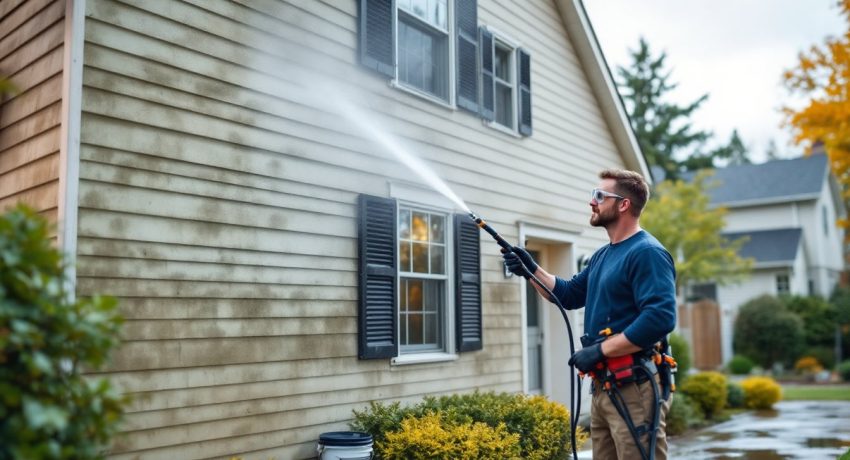
- Never aim the nozzle at people, pets, or windows at close range. Even a 1,500 PSI stream can shatter glass or cause lacerations.
- Start with the widest spray pattern and lowest pressure, then increase only if needed.
- Keep both hands on the wand. The recoil on gas models is significant.
- Shut off the washer and release trigger pressure before changing nozzles.
Electrical safety:
- Cover exterior outlets with weatherproof tape or plastic bags.
- Use a GFCI-protected outlet for electric pressure washers.
- Keep extension cords out of standing water.
Environmental considerations:
- Redirect downspouts and use tarps to prevent soapy runoff from entering storm drains or waterways.
- Choose biodegradable cleaners when possible, especially near gardens or fish ponds.
- Wet down plants before and after cleaning to dilute any overspray.
Weather and timing:
- Avoid cleaning in direct sun: solutions dry too fast and leave residue.
- Don’t clean when temperatures are below 40°F, cleaning solutions lose effectiveness, and water can freeze in cracks.
- Check the weather forecast: rain within 24 hours will undo the work.
Most house exterior cleaning guides emphasize the importance of working methodically and never rushing through prep or safety checks.
When to Hire a Professional vs. Going DIY
Not every exterior cleaning job is DIY-friendly. Knowing when to call a pro saves time, prevents damage, and sometimes avoids injury.
DIY-appropriate scenarios:
- Single-story homes or two-story homes where the upper level is accessible with a standard extension ladder.
- Vinyl, fiber cement, or aluminum siding in good condition with no significant repairs needed.
- Light to moderate dirt, mildew, or algae buildup that responds to standard cleaning solutions.
- Homeowners comfortable operating a pressure washer or willing to rent equipment and learn proper technique.
When to hire a professional:
- Three-story homes or complex rooflines. The risk of falls increases exponentially on tall ladders, especially when handling hoses or equipment.
- Historic or delicate materials. Old wood siding, stucco, EIFS (synthetic stucco), or soft brick can be permanently damaged by improper pressure or chemicals.
- Heavy organic growth or staining. If mildew has penetrated porous materials or oxidation has dulled the finish, pros have access to stronger solutions and restoration techniques.
- Homes with known moisture problems. Pressure washing can worsen hidden leaks or water intrusion. A professional can identify compromised areas before causing further damage.
- Roof cleaning. Walking on roofs, especially asphalt shingle roofs, requires specialized safety gear and risks voiding shingle warranties if done incorrectly. Softwash roof cleaning, using low-pressure chemical application, is best left to licensed contractors.
- Lack of equipment or time. Renting a quality pressure washer, buying cleaning solutions, and spending a full weekend might cost nearly as much as hiring out, especially for larger homes.
Cost considerations (as of 2026, U.S. averages):
- DIY: Expect $100–$300 for equipment rental, cleaning solutions, and safety gear for a typical single-family home.
- Professional service: $250–$600 for a full exterior wash, depending on home size, material, and regional labor rates. Prices are higher in metro areas and for multi-story homes.
Licensing and insurance:
- Verify that contractors carry general liability insurance and workers’ comp. Pressure washing can cause property damage (broken windows, stripped paint, water intrusion), and uninsured contractors leave homeowners liable.
- Some states or municipalities require contractors to be licensed for exterior cleaning services, especially if chemical applications are involved.
If someone’s on the fence, a hybrid approach works: DIY the accessible first-floor areas and hire a pro for upper stories or tricky sections around chimneys, dormers, and eaves. That splits the cost while keeping the homeowner safely on the ground.