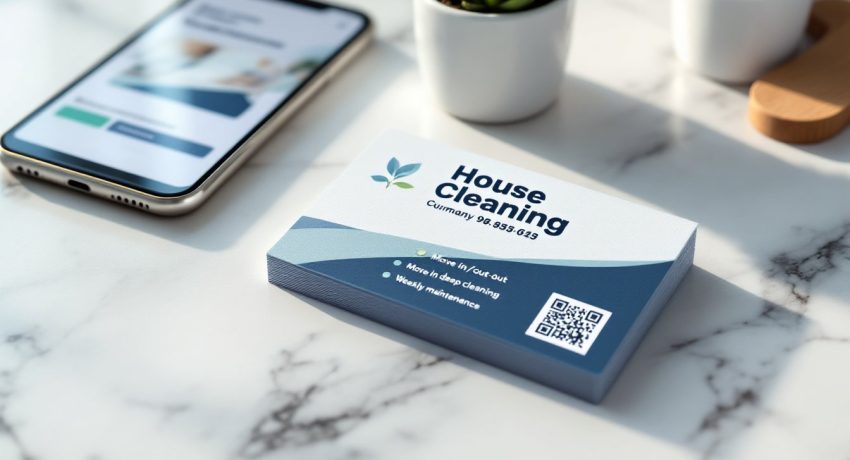

Starting a house cleaning business doesn’t require a contractor’s license or specialized certifications, but it does demand smart marketing. While digital ads and social media have their place, a well-designed business card remains one of the most cost-effective tools for landing new clients. Hand someone a card after they mention their cluttered kitchen or dusty blinds, and you’ve got a tangible reminder sitting in their wallet. The problem? Most cleaning service cards blend into the pile, bland fonts, generic clipart, and no reason to call. This guide walks through practical design ideas, essential information to include, and budget-friendly printing strategies that help a card convert curiosity into booked appointments.
Table of Contents
ToggleKey Takeaways
- House cleaning business cards remain a cost-effective, tangible marketing tool that sits in wallets and drives referrals when digital ads fade from memory.
- Include essential contact details (phone as primary), service area, specific services offered, and licensing/insurance info to establish trust and filter appropriate leads.
- Use professional color schemes like white with navy text or soft greens for eco-friendly services to signal cleanliness and reliability without chaotic design elements.
- Add a first-time discount or QR code directly on the card to increase retention and bridge physical cards to digital booking pages.
- Print on 16–18 pt matte cardstock through bulk online services to convey quality and durability, then distribute strategically through satisfied clients, real estate partners, and local retailers.
- Track which distribution channels generate the most inquiries by asking new clients how they found you, allowing you to refine your house cleaning business card strategy over time.
Why Your Cleaning Business Card Matters More Than You Think
A business card serves as a physical handshake that outlasts a conversation. Unlike a Facebook post that disappears in a scroll or a website URL that gets forgotten, a card sits on a fridge, tucked in a purse, or pinned to a corkboard. For cleaning businesses, this staying power matters because hiring decisions often happen weeks after the initial contact, when someone finally admits their baseboards need attention or they’re hosting family and need a deep clean.
Cleaning services also rely heavily on word-of-mouth referrals. When a satisfied client recommends a service to a neighbor, they’ll hand over a card rather than fumble through their phone for contact details. A card that clearly lists services and pricing tiers makes that referral seamless. It’s not lifestyle fluff, it’s a functional sales tool that works even when the business owner isn’t in the room.
The card also establishes professionalism in an industry where trust matters. Letting someone into a home requires confidence in their reliability and attention to detail. A thoughtfully designed card signals that the business takes itself seriously, which translates to clients taking it seriously too. Cheap card stock with smudged ink or a card printed on a home inkjet printer undermines that trust before the first cleaning even happens.
Essential Elements Every Cleaning Business Card Should Include
Start with the basics: business name, owner name, phone number, and email address. These are non-negotiable. Many cleaning clients still prefer calling over emailing, so make the phone number the most prominent contact detail, use a bold or slightly larger font size.
Add a service area if operating in specific ZIP codes or neighborhoods. A line like “Serving Downtown Portland & Surrounding Areas” or “Residential Cleaning in Northern Virginia” filters out calls from clients outside the coverage zone, saving time on both ends.
List core services concisely. Instead of vague phrases like “all your cleaning needs,” try:
- Move-in/move-out deep cleaning
- Weekly or bi-weekly maintenance
- Post-construction cleanup
- Green cleaning options
This specificity helps clients self-select. Someone needing post-renovation dust removal knows immediately whether the service fits.
Include licensing or insurance information if applicable. A line reading “Licensed & Insured” or “Bonded & Insured” builds credibility. Some states don’t require cleaning businesses to hold specific licenses, but carrying general liability insurance is standard practice. Mentioning it reassures clients that damages or accidents are covered.
Consider adding a QR code linking to an online booking page or service menu. Modern card templates from most print shops now include QR code generation. It bridges the physical card to digital scheduling without cluttering the design. Test the code before printing a full batch, scanning it should land clients on a mobile-friendly page, not a desktop-only site.
Skip personal social media handles unless the business maintains an active, professional presence. A dormant Instagram account with three posts from 2024 does more harm than good.
Creative Design Ideas That Make Your Card Stand Out
Color Schemes That Convey Cleanliness and Trust
Color psychology plays a real role in first impressions. White, light blue, and soft green dominate cleaning industry branding because they subconsciously signal cleanliness, freshness, and safety. White backgrounds with navy or dark gray text keep cards readable and professional without feeling sterile.
Avoid neon colors or overly busy patterns, they suggest chaos rather than order. A muted palette works better than trying to mimic the bright, energetic feel that works for home organization tips but clashes with cleaning service expectations.
For eco-friendly cleaning businesses, earthy tones like sage green, taupe, or recycled kraft paper stock reinforce the green branding. Pair these with a leaf or water droplet icon, but keep it subtle. Clipart-heavy designs cheapen the overall look.
If the business specializes in commercial cleaning or post-construction work, darker tones like charcoal or deep blue paired with metallic accents (silver foil or embossed text) convey durability and heavy-duty capability. Match the color scheme to the service niche.
Clever Taglines and Messaging That Stick
A tagline should be short, specific, and benefit-driven. Generic lines like “We clean so you don’t have to” get forgotten immediately. Stronger options include:
- “Your home, spotless, guaranteed.”
- “Deep cleans that pass the white-glove test.”
- “Because life’s too short to scrub grout.”
Taglines work best when they address a pain point or promise a measurable outcome. “Same-day availability” appeals to clients needing last-minute help before guests arrive. “Pet-safe products only” attracts households with animals.
Some cleaning businesses add a brief risk-reversal statement on the back of the card: “Not satisfied? We’ll re-clean for free.” It’s bold, but it positions the service as confident and client-focused. This approach is common in service industries where quality varies widely.
Another tactic: include a first-time discount printed directly on the card. “Show this card for 15% off your first clean” turns the card into a coupon, increasing the odds someone will hold onto it. Track redemption rates by assigning a unique code to each card batch to measure which distribution channels work best.
Avoid overloading the card with text. If a tagline, discount, and service list start crowding the layout, cut the tagline. The contact info and services matter more than a clever phrase.
Budget-Friendly Printing and Distribution Strategies
Standard card dimensions are 3.5 inches by 2 inches, which fit wallets and most cardholders. Deviating from this size, like oversized or square cards, might seem creative, but they get tossed because they don’t fit anywhere. Stick with the standard unless the business has a specific reason to stand out in a portfolio-style stack.
For printing, online services like Vistaprint, Moo, or GotPrint offer bulk pricing that drops per-card costs significantly. Ordering 500 cards typically costs $20–$40 depending on finish (matte, glossy, or uncoated). Matte finishes work well for cleaning businesses because they’re easier to write on if a client wants to jot a note on the back. Glossy finishes look polished but can feel slippery and less practical.
Cardstock weight matters for perceived quality. Standard is 14-pt cardstock: upgrade to 16-pt or 18-pt for a sturdier feel that suggests durability. Thicker stock costs an extra $5–$10 per 500 cards but makes a noticeable difference when handed to a potential client.
Skip expensive embossing or foil stamping unless targeting high-end residential clients. For most cleaning services, clean design on quality cardstock beats flashy extras.
Distribution tactics that work:
- Leave cards with satisfied clients and ask them to pass along extras to neighbors. Include five to ten cards with each invoice or thank-you note. Much like the approach seen in discussions about holiday gift for new cleaning person, small gestures can build goodwill and referrals.
- Partner with real estate agents who work with buyers needing move-in cleans or sellers preparing homes for listing. Offer a referral fee or reciprocal promotion.
- Drop off stacks at local businesses that attract homeowners: hardware stores, paint shops, home decor retailers. Ask to leave cards near the checkout counter. Some businesses charge a small fee: others allow it free if the service isn’t competing with theirs.
- Attach cards to door hangers in target neighborhoods. Door hangers cost about $0.10–$0.25 each and allow for more space to explain services. Staple or attach a business card to the hanger for easy removal and storage.
- Include cards in direct mail campaigns. If sending postcards or flyers, attach a perforated business card along the edge. This gives recipients two takeaways: the promo piece and a card to keep.
Track which distribution methods bring in the most calls by asking new clients, “How did you hear about us?” If door hangers in a specific ZIP code generate ten calls while hardware store drops yield none, adjust accordingly. Many cleaning businesses, like those featured on product reviews for home services, benefit from testing and refining their outreach methods. Marketing isn’t guesswork when results are measured.
Conclusion
A business card won’t book clients on its own, but it’s the bridge between a conversation and a signed contract. Design with clarity, print with quality, and distribute with intention. Skip the generic templates and focus on what sets the service apart, whether that’s eco-friendly products, same-day availability, or a satisfaction guarantee. The card that gets kept is the one that gets called.