
When your home’s siding starts looking dingy with streaks of algae and mildew, it’s time for a cleaning, but reaching for a pressure washer might do more harm than good. Soft washing has become the go-to method for exterior cleaning, and for good reason: it uses low-pressure water combined with specialized cleaning solutions to safely remove organic growth without damaging surfaces. If you’ve been searching for “soft wash house cleaning near me,” you’re likely weighing the pros and cons of hiring a pro versus tackling it yourself. This guide walks through everything you need to know about soft washing, how it works, what it costs, and how to find a reliable service in your area.
Table of Contents
ToggleKey Takeaways
- Soft wash house cleaning uses low-pressure water (500 PSI or less) combined with biodegradable cleaning solutions to safely remove algae, mold, and mildew without damaging exterior surfaces like vinyl siding, stucco, or painted trim.
- Soft washing is safer and more effective than pressure washing for most home exteriors, preventing water damage behind siding, paint stripping, and damage to seals while keeping surfaces cleaner for 12–18 months compared to 6–8 months with pressure washing.
- Soft wash service costs typically range from $0.30–$0.80 per square foot, meaning a 2,000-square-foot single-story home runs $300–$600, with pricing varying by home height, siding material, soiling level, and accessibility.
- Before hiring a soft wash company near you, verify insurance coverage ($1 million minimum liability), check multiple online reviews, request local references, and get at least three detailed written estimates without phone-only quotes.
- DIY soft washing is feasible for single-story homes if you’re comfortable handling chemicals, but hire a professional for two-story homes, delicate materials, or if you lack equipment and chemical safety experience.
- Always ask potential soft wash services about their cleaning solutions, satisfaction guarantees, plant protection methods, written contracts, insurance proof, and whether they subcontract work to ensure quality and accountability.
What Is Soft Wash House Cleaning and How Does It Work?
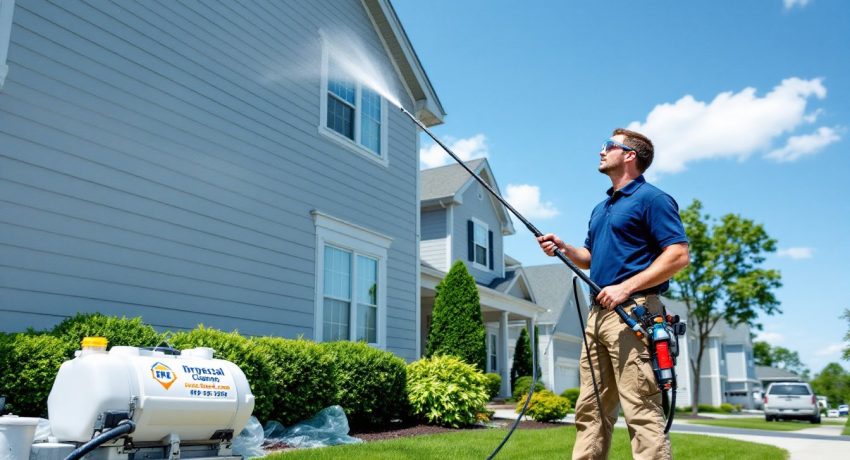
Soft washing is a cleaning method that relies on chemical solutions rather than brute force to clean exterior surfaces. Unlike pressure washing, which uses water pressure between 2,000–4,000 PSI, soft washing operates at 500 PSI or less, roughly the same pressure as a garden hose with a spray nozzle.
The process starts with applying a biodegradable cleaning solution, typically containing sodium hypochlorite (household bleach), surfactants, and water. This mixture breaks down algae, mold, mildew, and lichen at the root level rather than just blasting it off the surface. The solution sits for 10–20 minutes, then gets rinsed away with low-pressure water.
Soft washing works on vinyl siding, stucco, wood shingles, composite materials, and painted surfaces, basically any exterior that could be damaged by high pressure. It’s particularly effective on vertical surfaces where organic growth thrives in shaded or damp areas. The cleaning agents do the heavy lifting, which means less risk of forcing water behind siding or stripping paint from trim.
Why Soft Washing Is Better Than Pressure Washing for Most Homes
Pressure washing has its place, concrete driveways, brick pavers, and heavily soiled decks can handle the force. But for most home exteriors, it’s overkill and can cause real damage.
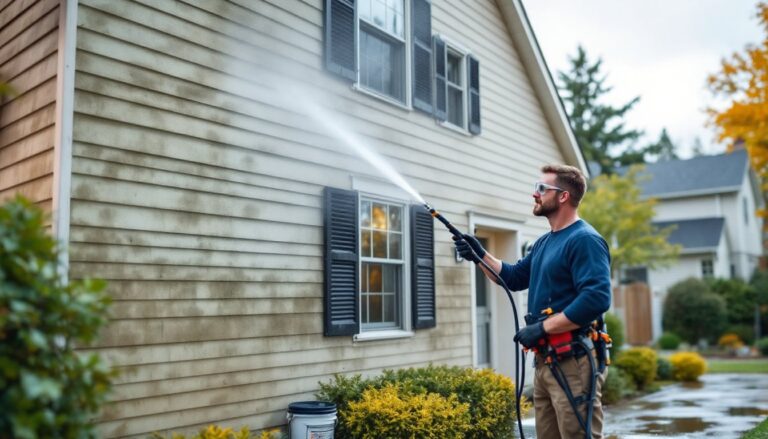
High-pressure water can:
• Force water behind siding, leading to mold growth inside wall cavities
• Strip paint from wood trim and siding
• Scar vinyl siding or create permanent streaks
• Damage window seals and caulk joints
• Gouge softer materials like wood or stucco
Soft washing avoids these issues entirely. The chemical action kills organic growth at the source, which means surfaces stay cleaner longer, typically 12–18 months compared to 6–8 months with pressure washing. The low pressure also makes it safer for the operator and reduces the risk of injury from kickback or losing control of the wand.
Another advantage: soft washing uses significantly less water. A typical single-story home might require 100–150 gallons for a soft wash versus 300–500 gallons for pressure washing. That’s a meaningful difference if you’re in an area with water restrictions or paying for municipal water.
For roof cleaning especially, soft washing is the only method recommended by most shingle manufacturers. High-pressure washing can strip protective granules from asphalt shingles, voiding warranties and shortening roof lifespan. Platforms like Angi often highlight soft washing as the preferred method for delicate exterior surfaces.
How to Find Reliable Soft Wash Services in Your Area
Finding a reputable soft wash company takes more than a quick Google search. Start with these steps:
1. Check Online Reviews and Ratings
Look beyond star ratings. Read through recent reviews on multiple platforms, Google, Yelp, and HomeAdvisor, to spot patterns. Are customers happy with the results? Did the crew show up on time? Were there issues with damage or communication?
2. Verify Insurance and Licensing
Any legitimate exterior cleaning company should carry general liability insurance (minimum $1 million coverage) and workers’ compensation insurance if they have employees. Ask for proof before signing a contract. Some states require licensing for exterior cleaning services: check your local requirements.
3. Ask for Local References
A company working in your area should have recent customers nearby. Ask for 3–5 references you can contact, ideally homes similar to yours in size and siding type.
4. Look for Professional Affiliations
Membership in organizations like the Power Washers of North America (PWNA) or UAMCC (United Association of Mobile Contract Cleaners) indicates a company invests in training and follows industry best practices. It’s not a guarantee of quality, but it’s a positive signal.
5. Get Multiple Quotes
Aim for at least three detailed estimates. Avoid companies that quote over the phone without seeing your property, variables like siding type, square footage, and level of soiling all affect pricing.
What to Expect: Soft Wash Pricing and Service Details
Soft wash pricing varies by region, home size, and surface condition, but expect to pay $0.30–$0.80 per square foot for a full exterior wash. A typical 2,000-square-foot single-story home runs $300–$600, while a two-story home of the same footprint might cost $500–$900.
Pricing factors include:
• Home height: Two-story and split-level homes require more equipment and ladder work
• Siding material: Delicate surfaces or those requiring special cleaning agents cost more
• Level of soiling: Heavy mold, algae, or staining takes more time and chemical application
• Accessibility: Landscaping, fences, or tight spaces that complicate setup increase costs
• Additional services: Roof cleaning, gutter brightening, or deck washing add to the base price
Most companies offer package deals that bundle services. Adding roof cleaning to an exterior house wash often costs less than scheduling them separately.
A standard soft wash appointment takes 2–4 hours for an average home. The process includes:
- Pre-rinse to wet surfaces and nearby plants
- Application of cleaning solution to all exterior surfaces
- Dwell time (10–20 minutes) while chemicals work
- Low-pressure rinse, working from top to bottom
- Post-rinse of landscaping and walkways
Reputable companies will protect your plants and landscaping with tarps or pre-wetting, and rinse thoroughly afterward to prevent chemical contact with vegetation.
DIY Soft Washing vs. Hiring a Professional: Which Is Right for You?
DIY soft washing is doable if you’re comfortable with basic equipment and chemical handling. Here’s what you’ll need:
Equipment & Materials:
• Soft wash pump system or downstream injector for a pressure washer ($200–$600)
• Garden hose with adequate flow (minimum 5 GPM)
• Extension wand (24–48 feet for two-story homes)
• Cleaning solution: Sodium hypochlorite (12.5% pool chlorine), surfactant, water
• PPE: Chemical-resistant gloves, safety goggles, long sleeves, closed-toe shoes
Pre-mixed soft wash solutions are available, but mixing your own is more economical. A typical mix is 1 part 12.5% sodium hypochlorite, 1 part water, and surfactant (about 1 ounce per 5 gallons). Always add bleach to water, not water to bleach, to avoid splashing.
DIY makes sense if:
• You have a single-story home with easy access
• You’re comfortable handling chemicals safely
• You own or can rent the equipment
• You have 4–6 hours to dedicate to the project
Hire a professional if:
• Your home is two stories or has complex rooflines
• You lack the equipment or experience with chemical mixing
• You’re dealing with delicate materials (wood shingles, painted trim)
• You simply don’t have the time or physical ability to do it safely
Safety note: Sodium hypochlorite is corrosive. It will bleach clothing, damage plants if not rinsed properly, and cause skin and eye irritation. Always work on a calm day with no wind, and keep children and pets indoors during application and rinsing.
Questions to Ask Before Hiring a Soft Wash Company
Before you sign a contract or hand over a deposit, nail down these details:
1. What cleaning solution do you use?
The company should explain their mix and confirm it’s safe for your siding type and landscaping. Avoid companies that are vague about their chemicals or refuse to disclose ingredients.
2. Do you guarantee your work?
Most reputable companies offer a satisfaction guarantee or will return for touch-ups if you’re not happy with the results within a certain timeframe (often 7–14 days).
3. How do you protect plants and landscaping?
They should pre-wet and post-rinse all vegetation, and use tarps or barriers for sensitive plants. If they shrug this off, keep looking.
4. Will you provide a written estimate and contract?
Get everything in writing: scope of work, price, payment terms, and timeline. Verbal agreements lead to misunderstandings.
5. What happens if there’s damage?
Understand their liability coverage and claims process. A company with proper insurance should have no problem walking you through this.
6. Do you subcontract the work?
Some companies farm out jobs to independent contractors. That’s not necessarily a red flag, but you should know who’s doing the work and confirm they’re insured.
7. Can you provide proof of insurance?
Don’t just take their word for it. Ask for a certificate of insurance naming you as an additional insured for the duration of the work. When evaluating service options, home service provider reviews can help narrow down your choices.
Conclusion
Soft washing delivers effective, long-lasting exterior cleaning without the risks of high-pressure methods. Whether you hire a pro or tackle it yourself, focus on doing it right: proper chemical ratios, adequate dwell time, thorough rinsing, and attention to safety. A clean exterior not only looks better, it protects your investment by preventing organic growth from degrading siding and paint over time.