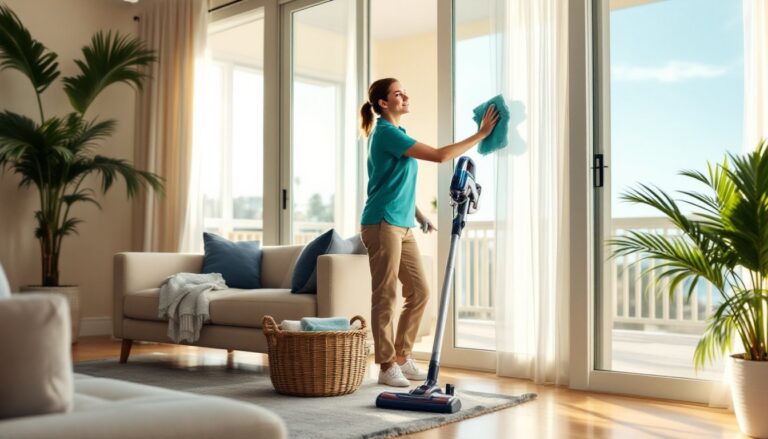

A truly clean house isn’t just about what meets the eye at waist height. Most homeowners scrub countertops and vacuum floors, but dust clings to ceiling fan blades, cobwebs gather in corners, and grime settles on baseboards where we never look. Top to bottom cleaning tackles every surface in the right sequence, starting high and working downward, so dirt and debris fall onto surfaces you haven’t cleaned yet. This systematic approach prevents double work and delivers a spotless result that lasts. Whether preparing for guests, doing a seasonal deep clean, or establishing a maintenance routine, this room-by-room guide provides a practical framework for achieving a genuinely clean home.
Table of Contents
ToggleKey Takeaways
- Top to bottom house cleaning prevents double work by starting with high surfaces and letting dust fall onto areas you haven’t cleaned yet, saving time and effort.
- Working from ceilings and light fixtures downward to baseboards and floors maintains momentum and ensures every surface gets addressed in the correct sequence.
- Essential supplies include an extension pole with duster, microfiber cloths, appropriate floor cleaners, and safety gear like dust masks and safety glasses for protecting yourself during overhead work.
- Cleaning ceiling fans with a pillowcase over each blade traps dust inside instead of scattering it, while cleaning high-touch surfaces like doorknobs with disinfectant prevents germ transmission.
- This systematic top to bottom cleaning approach helps identify maintenance issues early, such as burnt-out bulbs, water stains, or pest activity, making deep cleaning sessions valuable for both cleanliness and home maintenance.
- Always vacuum or sweep floors thoroughly before mopping to remove loose debris, and mop hard surfaces with cleaners matched to the floor type to avoid water damage and achieve spotless results.
What Is Top to Bottom House Cleaning?
Top to bottom cleaning is a methodical approach that starts at the highest surfaces in a room and progresses downward to the floor. The logic is straightforward: dust, cobwebs, and debris dislodged from ceiling fans or crown molding will fall onto surfaces below. If floors are cleaned first, those same surfaces get dirty again when working overhead.
This method differs from spot cleaning or routine maintenance. It’s a comprehensive process that addresses every surface in sequence: ceilings and light fixtures first, then walls and windows, followed by furniture and counters, and finally baseboards and floors. Most professional cleaners follow this workflow because it’s efficient and eliminates redundant work.
The approach applies to every room, though the specific tasks vary. In kitchens, it means starting with exhaust fan grilles and cabinet tops before scrubbing counters and mopping. In bathrooms, clean ceiling vents and light fixtures before tackling tile walls and floors. The principle remains consistent: gravity is your ally, not your enemy.
Why Clean From Top to Bottom?
Working from top to bottom prevents the frustration of recleaning surfaces. Dust dislodged from a ceiling fan will settle onto furniture, and drips from cleaning windows will streak down walls. By addressing high surfaces first, everything falls onto areas that haven’t been cleaned yet. This saves time and delivers better results.
This sequence also maintains momentum. Starting with less-trafficked areas like ceiling corners and upper walls builds confidence before tackling heavily soiled zones like kitchen counters or bathroom floors. The method creates a natural workflow that keeps the project moving forward without backtracking.
From a practical standpoint, top to bottom cleaning helps identify maintenance issues early. Inspecting ceiling fixtures reveals burnt-out bulbs, checking wall corners exposes water stains or cracks, and cleaning baseboards uncovers pest activity or moisture damage. These observations allow homeowners to address problems before they escalate, making deep cleaning sessions doubly valuable for both cleanliness and home maintenance.
Essential Supplies and Tools You’ll Need
Gather supplies before starting to avoid mid-project interruptions. Having everything on hand keeps the workflow efficient and prevents half-finished rooms.
Cleaning Solutions:
- All-purpose cleaner for most hard surfaces (counters, appliances, furniture)
- Glass cleaner for windows and mirrors
- Wood polish or cleaner for furniture and trim (choose product appropriate to finish)
- Floor cleaner matched to surface type (hardwood, tile, vinyl, or laminate)
- Disinfectant spray or wipes for bathrooms and high-touch areas
Tools and Equipment:
- Extension pole with duster attachment for ceilings and ceiling fans
- Microfiber cloths (at least six, they trap dust better than cotton rags)
- Vacuum with attachments (crevice tool, upholstery brush, and extension wand)
- Mop and bucket or spray mop system
- Step ladder for reaching light fixtures and high shelves safely
- Scrub brushes in various sizes for grout, baseboards, and detail work
- Broom and dustpan for preliminary floor sweeping
Safety Gear:
- Dust mask or N95 respirator if sensitive to dust or mold
- Rubber gloves to protect hands from cleaning chemicals
- Safety glasses when cleaning overhead to keep debris out of eyes
Avoid mixing cleaning products, especially bleach and ammonia-based cleaners, which create toxic fumes. Read product labels for proper dilution ratios and surface compatibility. Ventilate rooms as you work by opening windows or running exhaust fans, particularly when using strong disinfectants or degreasers.
Step-by-Step Top to Bottom Cleaning Process
This systematic process ensures every surface gets addressed in the correct order. Work through one room completely before moving to the next, or tackle the same zone in every room before progressing downward. Both approaches work: choose based on personal preference and household layout.
Start High: Ceilings, Fans, and Light Fixtures
Begin at the ceiling and work down. These surfaces accumulate dust that becomes airborne when disturbed, so addressing them first prevents resettling on freshly cleaned areas.
-
Remove cobwebs from ceiling corners, crown molding, and around vents using an extension pole with a duster or microfiber cloth attachment. Work systematically around the room’s perimeter.
-
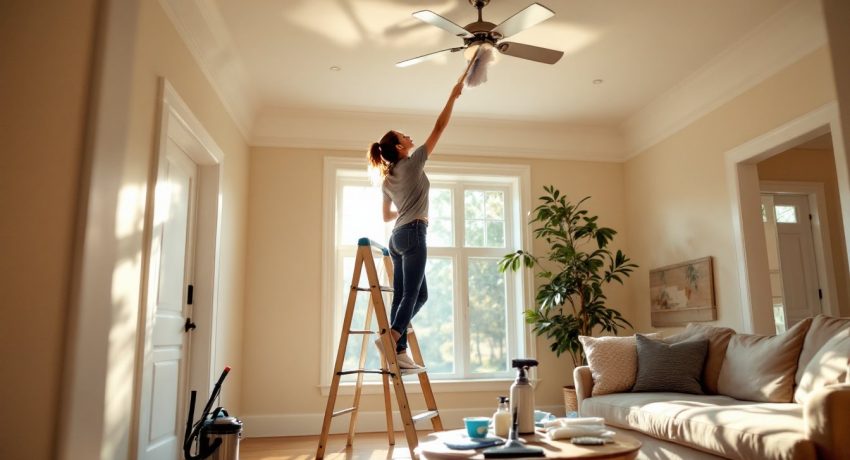
Clean ceiling fans by wiping each blade top and bottom. An old pillowcase slipped over each blade traps dust inside instead of scattering it. For stubborn grime, dampen the cloth with all-purpose cleaner. Don’t forget the motor housing and pull chains.
-
Wipe light fixtures and bulbs (with power off) using a dry microfiber cloth for glass globes and shades. For fixtures with intricate details, use a small brush to dislodge dust before wiping. Replace burnt-out bulbs now while the ladder is positioned.
-
Clean air vents and returns by removing register covers (most lift off or unscrew easily) and wiping grilles with a damp cloth. Vacuum inside the duct opening as far as the attachment reaches. This improves air quality and system efficiency.
-
Dust top surfaces of cabinets, door frames, and window casings that accumulate grime from rising air currents. These often-neglected zones collect surprising amounts of dust and grease, especially in kitchens.
Wear safety glasses during overhead work to protect eyes from falling debris. If the ceiling fan hasn’t been cleaned in months, spread a drop cloth below to catch heavy dust buildup. Effective cleaning strategies for challenging areas can streamline even the toughest jobs.
Middle Zones: Walls, Windows, and Furniture
Once high surfaces are clean, move to eye-level areas where smudges, fingerprints, and grime are most visible.
-
Spot-clean walls by addressing visible marks, scuffs, and light switch plates. Use a barely damp sponge or cloth with mild all-purpose cleaner, excess moisture can damage paint or drywall. Test in an inconspicuous area first if unsure about paint finish.
-
Wash windows inside and out starting at the top and working down in overlapping horizontal strokes. A squeegee provides streak-free results faster than paper towels. Clean window tracks and sills with a vacuum crevice tool followed by a damp cloth. Don’t skip exterior windows: dirty glass blocks natural light regardless of which side is clean.
-
Wipe down doors and hardware including doorknobs, handles, and hinges. These high-touch surfaces harbor germs and benefit from disinfectant. Clean both sides of interior doors, paying attention to areas around handles where grime accumulates.
-
Clean furniture surfaces by dusting first, then applying appropriate cleaner. Wood furniture needs product suited to its finish (polish for finished wood, oil for unsealed wood). Wipe upholstery with a vacuum upholstery attachment to remove dust and pet hair. Leather requires specialized cleaner and conditioner to prevent drying and cracking.
-
Address mirrors and glass surfaces with glass cleaner and microfiber cloth. Spray cleaner onto the cloth rather than directly on glass to prevent drips behind frames. Buff with a dry section of cloth for a streak-free shine.
-
Clean countertops and horizontal surfaces last in this zone. In kitchens, this means counters, stovetops, and appliance exteriors. In bathrooms, clean counters, faucets, and fixtures. In living spaces, dust shelves, tabletops, and entertainment centers. Move items rather than cleaning around them, dust hides beneath decorative objects.
Varying room-specific techniques helps adapt this framework to different spaces throughout the home.
Finish Low: Baseboards and Floors
The final zone captures all dust and debris that has fallen during the cleaning process. This sequence ensures floors stay clean once finished.
-
Vacuum or dust baseboards using a vacuum brush attachment or microfiber cloth. Baseboards collect surprising amounts of dust, pet hair, and debris. For stubborn grime or scuff marks, wipe with a damp cloth and all-purpose cleaner. A small scrub brush helps clean textured baseboard surfaces.
-
Clean floor vents and registers by removing covers and wiping grilles. Vacuum inside the duct opening. This step improves airflow and removes accumulated dust that would otherwise blow back into cleaned rooms.
-
Vacuum or sweep floors thoroughly before mopping. This removes loose dirt and debris that would turn into muddy streaks with wet mopping. Use appropriate vacuum attachments for corners and edges. For hard floors, a microfiber dust mop captures fine particles better than traditional brooms.
-
Mop hard surface floors using a cleaner matched to the floor type. Hardwood requires pH-neutral wood floor cleaner applied sparingly, excess water damages wood. Tile and vinyl tolerate more moisture but still benefit from damp (not soaking) mopping. Work backward toward the exit to avoid walking on wet floors.
-
Vacuum carpets and rugs using slow, overlapping passes. Multiple passes in different directions lift embedded dirt more effectively than one quick pass. Use edge attachments along baseboards and in corners where debris accumulates.
-
Spot-treat carpet stains as a final step. Address fresh spills immediately by blotting (never rubbing) with clean cloths. For set stains, use appropriate carpet cleaner following product directions. Test in a hidden area first to ensure colorfastness.
Floor cleaning represents the final step because it captures everything that has fallen from above. Rushing this sequence or cleaning floors first creates extra work and mediocre results. Comprehensive home maintenance approaches reinforce the importance of proper sequencing for lasting cleanliness.
Once floors are clean and dry, replace furniture moved during cleaning. Stand back and appreciate the results, a genuinely clean room from ceiling to floor.